



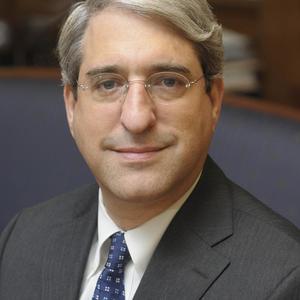

Prof Peter Salovey, PhD
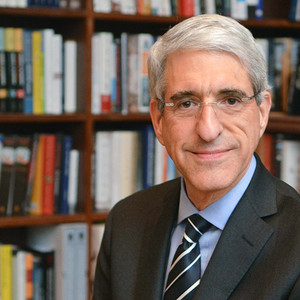
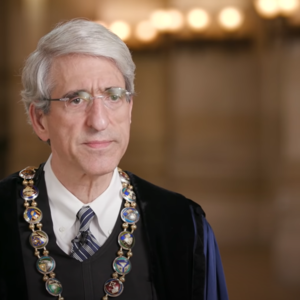
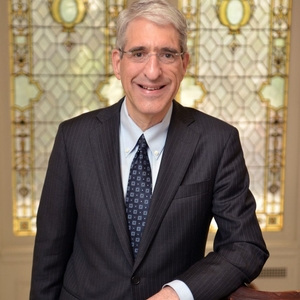
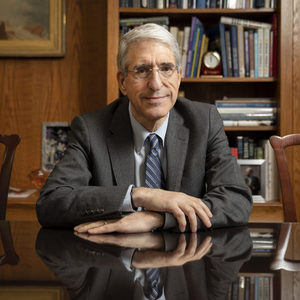
Peter Salovey is the Sterling Professor of Psychology and served as the 23rd President of Yale University. He joined the Yale faculty in 1986 after receiving an A.B. and M.A. from Stanford University in 1980, with departmental honors and university distinction, and a Ph.D. from Yale in 1986. He holds secondary faculty appointments in the Yale School of Management, School of Public Health, Institution for Social and Policy Studies, and Department of Sociology. He was appointed Dean of the Graduate School of Arts and Sciences in January 2003, Dean of Yale College in July 2004, Provost in October 2008, and served as President from July 2013 to June 2024.
Professor Salovey has authored or edited thirteen books translated into eleven languages and published more than 350 journal articles and essays, focused primarily on human emotion and health behavior. With John D. Mayer he developed a broad framework called “Emotional Intelligence,” the theory that just as people have a wide range of intellectual abilities, they also have a wide range of measurable emotional skills that profoundly affect their thinking and action. In his research on health behavior, Professor Salovey investigates the effectiveness of health promotion messages in persuading people to change risky behaviors relevant to cancer and HIV/AIDS.
Dr. Salovey has served on the National Science Foundation’s Social Psychology Advisory Panel, the National Institute of Mental Health Behavioral Science Working Group, and the NIMH National Advisory Mental Health Council. He was a recipient of a National Science Foundation Presidential Young Investigator Award, a National Cancer Institute CIS Partner in Research Award, and a Substance Abuse and Mental Health Services Administration Excellence Award. Professor Salovey also served as president of the Society for General Psychology and treasurer of the International Society for Research on Emotion. He was the founding editor of the Review of General Psychology and an associate editor of Emotion and Psychological Bulletin.
In addition to teaching and mentoring scores of graduate students, Professor Salovey has won both the William Clyde DeVane Medal for Distinguished Scholarship and Teaching in Yale College and the Lex Hixon '63 Prize for Teaching Excellence in the Social Sciences. In 2013 he was elected to the American Academy of Arts and Sciences and to the Institute of Medicine of the National Academies, and he has received honorary degrees from schools in Canada, China, Greece, Israel, Lithuania, South Africa, Taiwan, and the United States.
Primary Interests:
- Applied Social Psychology
- Emotion, Mood, Affect
- Health Psychology
- Interpersonal Processes
- Judgment and Decision Making
- Persuasion, Social Influence
Note from the Network: The holder of this profile has certified having all necessary rights, licenses, and authorization to post the files listed below. Visitors are welcome to copy or use any files for noncommercial or journalistic purposes provided they credit the profile holder and cite this page as the source.
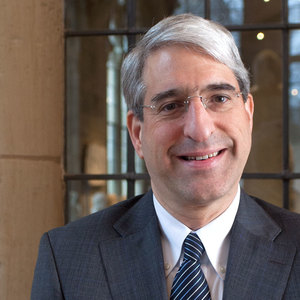
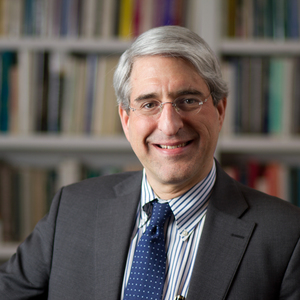
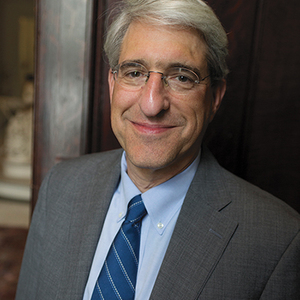
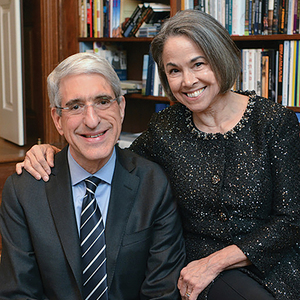
Image Gallery




Video Gallery

Inauguration as Yale University's 23rd President
Select video to watch
-
1:49:19 Inauguration as Yale University's 23rd President
Length: 1:49:19
-
1:09:33 Evolution, Emotion, and Reason: Love
Length: 1:09:33
-
1:16:08 Emotional Intelligence: Is There Anything to It?
Length: 1:16:08
-
17:16 The Pursuit of Happiness (2011 Yale College Freshman Address)
Length: 17:16
-
19:38 Emotional Intelligence and Leadership
Length: 19:38
-
5:46 Interview on Emotional Intelligence (Part 1)
Length: 5:46
-
7:01 Interview on Emotional Intelligence (Part 2)
Length: 7:01
-
19:34 Yale Provost to Be Yale's Next President
Length: 19:34
-
1:02:39 Higher Education in a Post-COVID World
Length: 1:02:39
Books:
- Caruso, D. R., & Salovey, P. (2004). The emotionally intelligent manager: How to develop and use the four key emotional skills of leadership. San Francisco, CA: Jossey-Bass.
- Feldman Barrett, L., & Salovey, P. (Eds.). (2002). The wisdom in feeling: Psychological processes in emotional intelligence. New York: Guilford Press.
- Salovey, P. (Ed.). (1991). The psychology of jealousy and envy. New York: Guilford Press.
- Salovey, P., & Rothman, A. J. (Eds.). (2003). The social psychology of health: Key readings. Philadelphia, PA: Psychology Press.
- Salovey, P., & Sluyter, D. (Eds.). (1997). Emotional development and emotional intelligence: Educational implications. New York: Basic Books.
- Salovey, P., Brackett, M. A., & Mayer, J. D. (Eds.). (2004). Emotional intelligence: Key readings on the Mayer and Salovey model. Port Chester, NY: Dude Press.
- Singer, J. A., & Salovey, P. (1993). The remembered self: Emotion and memory in personality. New York: The Free Press.
Journal Articles:
- Apanovitch, A. M., McCarthy, D., & Salovey, P. (2003). Using message framing to motivate HIV testing among low-income, ethnic minority women. Health Psychology, 22, 60-67.
- Brackett, M. A., Rivers, S. E., Shiffman, S., Lerner, N., & Salovey, P. (2006). Relating emotional abilities to social functioning: A comparison of self-report and performance measures of emotional intelligence. Journal of Personality and Social Psychology, 91, 780-795.
- Grewal D., & Salovey, P. (2005). Feeling smart: The science of emotional intelligence. American Scientist, 93, 330-339.
- Lopes, P. N., Brackett, M. A., Nezlek, J. B., Schütz, A., Sellin, I., & Salovey, P. (2004). Emotional intelligence and social interaction. Personality and Social Psychological Bulletin, 30, 1018-1034.
- Mayer, J. D., Salovey, P., & Caruso, D. R. (2008). Emotional intelligence: New ability or eclectic traits? American Psychologist, 63, 503-517.
- Mayer, J. D., Salovey, P., Caruso, D. R., & Sitarenios, G. (2003). Measuring emotional intelligence with the MSCEIT V2.0. Emotion, 3, 97-105.
- Salovey, P., & Grewal, D. (2005). The science of emotional intelligence. Current Directions in Psychological Science, 14, 281-285.
- Salovey, P., Rothman, A. J., Detweiler, J. B., & Steward, W. (2000). Emotional states and physical health. American Psychologist, 55, 110-121.
- Williams-Piehota, P., Pizarro, J., Schneider, T. R., Mowad, L., & Salovey, P. (2005). Matching health messages to monitor-blunter coping styles to motivate screening mammography. Health Psychology, 24, 58-67.
Courses Taught:
- Current Work in Social Psychology and Personality
- Great Big Ideas
- Health Cognition, Health Communication, and Health Behavior
- Introduction to Psychology
- Professional Issues in Personality-Social Psychology
- Psychology and Law
- Psychology of Emotion
- Research Topics in Emotion, Health, and Social Behavior
- Social and Clinical Perspectives on the Self
- Social Learning Theory and Cognitive-Behavioral Intervention
- Teaching Undergraduate Psychology
Prof Peter Salovey, PhD
Department of Psychology
Yale University
100 College Street, PO Box 208047
New Haven, Connecticut 06520-8047
United States of America
- Work: (203) 432-1286
- Home: (203) 562-2307
